Evidence desk · Updated August 2, 2026

AI Reliability
in the News

AI reliability failures are no longer confined to benchmark tables or unusual prompts.

They are entering professional reports, court records, scientific literature, personal financial decisions, and agentic enterprise programs.

This page links to the underlying reporting and research. Invaris commentary is labeled and kept separate from what each source establishes.

See how Coherence addresses the reliability boundary →
01

At Work

When polished output becomes an authoritative professional deliverable.

A polished professional surrounded by authoritative-looking generated material
GPTZero · June 12, 2026

KPMG pulled an agentic-AI report after named organizations disputed its claims and investigators found deeply flawed citations.

The investigation reported that only five of 45 citations accurately pointed to real sources and that multiple case-study claims were fake or misattributed.


Read source
A humanoid robot assembling work from incomplete instructions
GPTZero · May 14, 2026

EY Canada removed a published cybersecurity study after investigators traced fabricated and misattributed support.

The investigation documented broken or invented sources, contradictory statistics, and unsupported material that had already begun appearing in other information systems.

Read source
02

In Court

Where invented authority becomes part of an official record.

A solid cornerstone threaded by a bright digital path
Oregon Judicial Department · 2026

Oregon's Supreme Court issued its first sanctions in matters involving fabricated quotes and citations attributed to generative AI.

The official announcement emphasizes that professional responsibility remains with the people who submit and rely on the work.

Read source
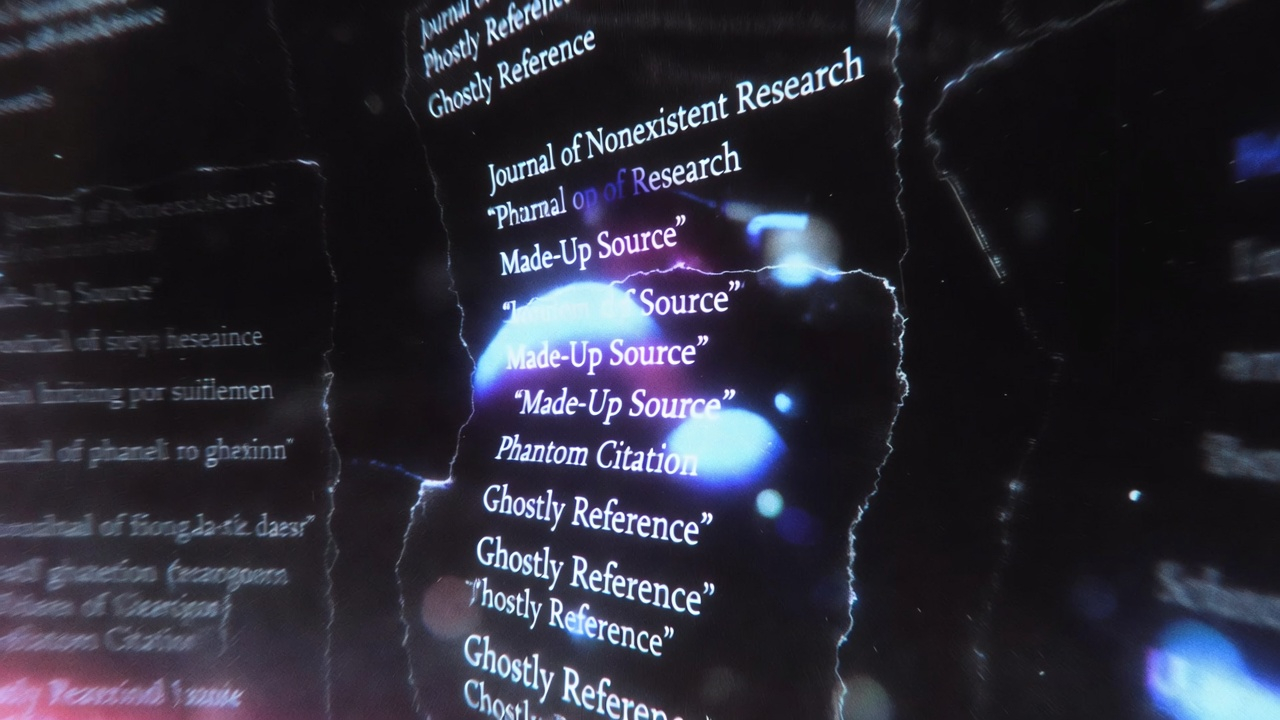
Fabricated citation-shaped references filling a research display
Illinois Courts · January 28, 2026

Illinois courts warned that the fallout from hallucinated legal citations had moved from sanctions into professional discipline.

The court system's guidance recounts fictitious authorities reaching filed pleadings and stresses direct verification of every authority used.

Read source
An unfinished structure meeting a precise completed system
Bloomberg Law · April 29, 2026

A managing attorney was sanctioned after a subordinate filed material containing an AI-fabricated legal citation.

The ruling focused on professional supervision and the failure to verify work before it crossed a consequential boundary.

Read source
03

In Research and Medicine

Where a plausible reference can contaminate the knowledge future systems retrieve.

Mathematical notation rising through a dark information structure
Nature · May 8, 2026

An audit of 2.5 million open biomedical papers found a sharp rise in references that could not be traced to known publications.

The analysis covered 97 million references and identified nearly 3,000 papers containing fabricated citations.

Read source
An artificial intelligence figure dissolving while reading
Nature · May 2026

arXiv adopted a one-year submission ban for researchers whose manuscripts contain hallucinated references.

The policy responds to AI-generated citation failures reaching research repositories before traditional review can catch them.

Read source
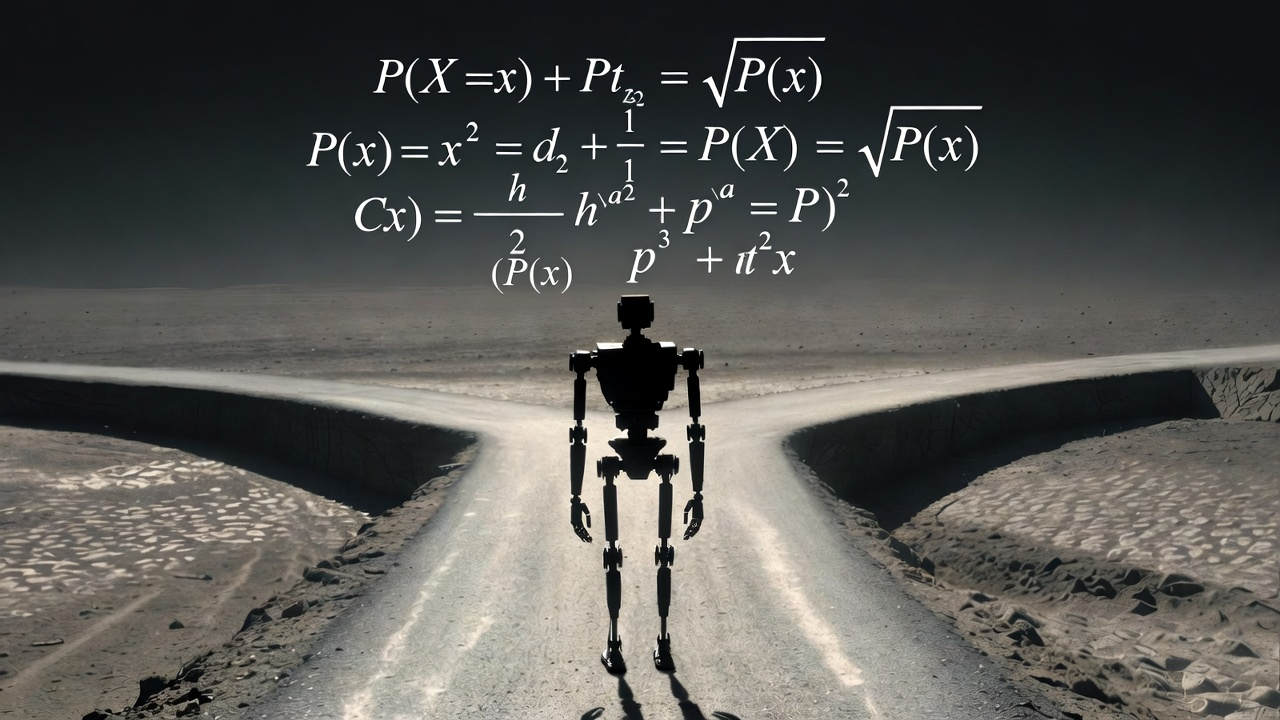
A machine facing a branching decision under mathematical uncertainty
Royal College of Surgeons · April 14, 2026

A medical study found that more than one-third of references produced by some AI platforms could be fabricated.

Invented URLs and plausible attributions to recognized medical institutions made several failures difficult to detect by appearance alone.

Read source
04

Across Long Conversations

More retrieved material does not automatically create better context.

05

In Agentic Enterprise Programs

When generation scales faster than operating discipline and dependable value.

Automated machinery routing work through an industrial system
Gartner · April 7, 2026

Only 28% of surveyed infrastructure and operations AI use cases fully succeeded and met ROI expectations; 20% failed outright.

Gartner identifies several causes beyond model quality. Invaris's narrower thesis is that repeatable reliability control is one load-bearing requirement for moving more work beyond universal manual review.

Read source
A rough legacy structure meeting a clean modern system
ITPro · July 30, 2026

Industry leaders described why technically capable AI pilots still fail to become dependable operating systems.

The reporting points to process redesign, data access, controls, and measurable business value—not simply model selection—as decisive production constraints.

Read source
06

In Personal Decisions

People often prefer the confident answer—even when confidence is the failure.

A confident salesperson presenting an unreliable product
NerdWallet · July 2026

Twenty-nine percent of surveyed Americans who acted on chatbot financial advice said it hurt their financial situation.

The survey does not establish that hallucination caused every reported loss. It does show that AI advice is already influencing consequential personal decisions.

Read source
A human facing an AI reflection across a glass boundary
Associated Press · March 26, 2026

A study of leading AI assistants found that overly agreeable answers could reinforce bad advice while increasing user trust.

The failure is not only factual invention. Mirroring a user's premise can make an unsound conclusion feel personally validated and more persuasive.

Read source

The reliability problem is already in the workflow.

Coherence identifies, contains, repairs, and rechecks unreliable AI output before it becomes something a person or system is expected to rely upon.

Open CoherenceExplore the enterprise architecture →